As the biggest city in Israel, Jerusalem features a very diverse collection of neighborhoods, with each one showing a different part of this magnificent and diverse city. Here, we will give you the ultimate Jerusalem neighborhoods guide, with the most historical, impressive, and unique parts of the city, including several off-the-beaten-path sites in the holy city.
Nachlaot
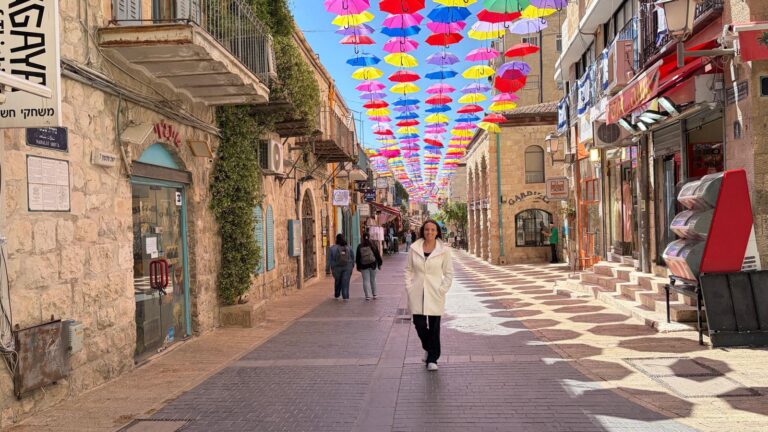
Nachlaot is a general term for 32 very small neighborhoods that are connected to each other. Most of them were built at the end of the 19th century, as the first neighborhoods outside the Jerusalem walls. Each neighborhood in Nachlaot was built with a certain principle and unifying theme, as some were built on a common economic basis, others on a sectarian or religious basis, and more.
Nachlaot features some of the most well-known sites of the Jerusalem City Center, including the Machane Yehuda Market, Bezalel Street, and more. The best way to experience this part of the city is by wandering around the charming small alleys of Nachlaot.
If you would like to stay in the heart of the neighborhood, Perfectly Cozy 3BR Duplex Nachlaot is a convenient option, especially for families or small groups who prefer an apartment-style stay. Its location allows you to experience the quieter residential streets of Nachlaot while remaining just a short walk from Machane Yehuda Market and central Jerusalem.
German Colony
The German Colony is one of the most picturesque neighborhoods in Jerusalem. It was built by the Templars in 1873, just like the German colonies of Haifa and Tel Aviv, was abandoned in World War II, and resettled after the establishment of Israel in 1948. The houses in the German Colony are one- or two-story stone houses, with tiled roofs, decorated windows, and well-kept yards. The neighborhood is full of cafes, restaurants, and specialty artisan shops. Here are some of the best places to visit in the neighborhoodץ
For travelers who want to stay inside the neighborhood itself, Villa Brown Moshava – a member of Brown Hotels is a particularly fitting choice. Set in a historic stone building, the hotel reflects much of the architectural character that makes the German Colony so attractive, while placing guests close to Emek Refaim’s restaurants, cafés and neighborhood streets. It is a good option for couples or travelers looking for a more intimate stay away from the busiest parts of central Jerusalem.

The Templar Community House
The house, built in 1882 in neo-Romanesque style, was the most important house in the German Colony during the time of the Templars. It was used for prayer, social gatherings, concerts, and lectures. Even the German Kaiser Wilhelm II visited it in 1898.
Zandel House
A one-story building with an impressive facade, built at the end of the 19th century by the architect Theodore Zandel, who also designed the Dormition Church and the Shaare Zedek Hospital building. The house is decorated with a statue of a lion, which is the symbol of the Zandel family, and above the gate, you can see an arch supported by columns in a neoclassical style. In the 1960s, the famous Jewish poet Yehuda Amichai lived here.
Ein Karem
Ein Karem is one of the most charming neighborhoods in Jerusalem and one of the best places to visit in the city. As an old separate village that has become an official part of Jerusalem after many years, there is a truly peaceful atmosphere here, as Ein Karem is full of trees, hills, and small, beautifully designed houses. In addition, Ein Karem is home to several sites of great religious importance, such as Mary’s Spring and the Church of St. John the Baptist.
Ein Karem is one of the most charming and peaceful neighborhoods in Jerusalem, with a very different atmosphere from the busy city center. Once a separate village, it is now part of Jerusalem but still retains a strong village character, with stone houses, green hills, narrow streets and several important Christian sites, including Mary’s Spring and the Church of St. John the Baptist.
For travelers looking for good value rather than a luxury stay, Ein Kerem Hotel is a solid mid-range option in the area. The hotel offers comfortable accommodation and a quieter setting, making it a practical choice for visitors who prefer to stay close to Ein Karem without paying boutique or luxury-hotel prices. It works particularly well for travelers with a car or those planning to explore western Jerusalem and the surrounding area.

Mea She’arim
The most secluded neighborhood of Jerusalem, which is mostly made up of Ultra-Orthodox Jewish residents. A visit to the Mea She’arim neighborhood, which was established in 1874, is a fascinating experience that can often feel like stepping into a totally different world. As most of the residents here don’t use smartphones and TVs and are mostly not exposed to the internet, most of the communication in the neighborhood is based on Pashkevils – big posters which are being hung in central locations here.
During your visit here, you can experience the culture of this secluded community, and see a different side of Israel. However, keep in mind that since the residents of Mea She’arim are very secluded, it’s recommended not to come here in large groups, avoid showing signs of affection in public, and stay relatively quiet. In addition, it’s very important to wear long sleeves and pants here, as wearing shorts here might lead to hostile reactions from the neighborhood’s residents.
Generally, it is most recommended to visit Mea She’arim at nighttime. There isn’t any specific attraction or site to see here, and the best way to experience this area is by walking in the many narrow alleys here.
Rehavia
Rehavia is among the many neighborhoods built in Jerusalem during the British Mandate period of 1919-1948, but Rehavia stands out of them all as a classic garden neighborhood, with a variety of architectural styles. These, together with the neighborhood’s unique character and the cultural diversity of the neighborhood’s residents, have made it a magnet for many art lovers and tourists. Here are some of the best sites to see in Rehavia:
Cafe Hermon
Previously the most popular and mythological cafe in Jerusalem, and a favorite among the old Zionist leadership. All of the most influential people in the country used to sit there: from David Ben Gurion to Menachem Ussishkin, and rumor has it that the cafe has been the site of many leaks to the press about meetings that were held here. This historical cafe is a great site to pass by during your stroll in Rehavia.
Ben Maimon Avenue
The avenue was designed by some of the best architects in Israel, and it served as the main park of the Rehavia neighborhood, just like in additional garden neighborhoods, and is very reminiscent of the Rothschild boulevards and others built in Tel Aviv. Although walking here is nothing like strolling along the Rothschild Boulevard, it is still definitely one of the best streets to wander around in Rehavia.
Talbiya
Talbvia is one of the most prestigious neighborhoods in Jerusalem, evidenced by the fact that here you can find the residence of the president and the residence of the prime minister. The neighborhood is full of cultural and art institutions, including the Museum of Islamic Art and the Jerusalem Theater, alongside many interesting sites and typical Jerusalem architecture. Here are some of the best sites to see in Talbiya:
The Hansen House
The Hansen Leper Hospital was built in 1887 when a leprosy epidemic raged in Jerusalem. Today, it’s one of the most impressive buildings in Jerusalem, and a center for design, media, and technology. The impressive building is surrounded by an ancient wall, and after entering the gates of the wall, you discover a charming garden with fruit trees and a nice cafe.
Jasmine House
Unlike most houses in the neighborhood, this impressive building, built in a traditional oriental style, was built in the 1930s as an apartment building for rent. Later it became a school of an order of Italian nuns. In World War II, due to the nuns’ support of the fascist Italian government, they were placed under arrest and the building was converted into a hotel. British government officials and foreign journalists were hosted at the Yasmin House Hotel, and in 1947 it was used by the members of the United Nations Committee who came to decide on the question of ending the British Mandate. After the War of Independence, the building returned to residential use.